


Removing .NET Framework 4.5 breaks Windows 2012
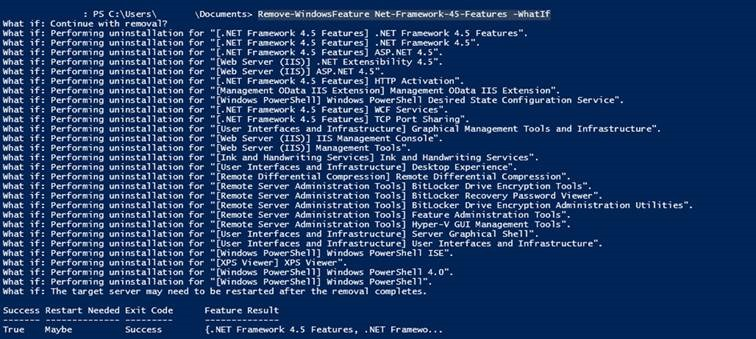
Windows Server 2012 includes .NET Framework, it provides a comprehensive and consistent programming model to build and run applications (including Roles and Features) that are built for various platforms.
It is not recommended to uninstall .NET Framework. In some given circumstances, there may be a requirement to remove/re-install it…

GPO Templates for Windows 8.1 and 2012 R2
I know many IT folk have been waiting for the updated Administrative Templates for Update 1 to ensure a smooth rollout…
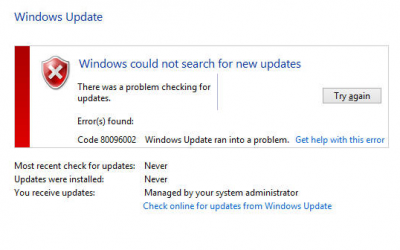
Windows 8 can’t find WSUS updates
A customer of mine recently started deploying Windows 8 in their environment. MDT was set up and the deployment was working fine, but after deployment the Windows 8 machines wouldn’t connect to the WSUS server.
When trying to connect to the WSUS-server through the Control Panel I got an error message.
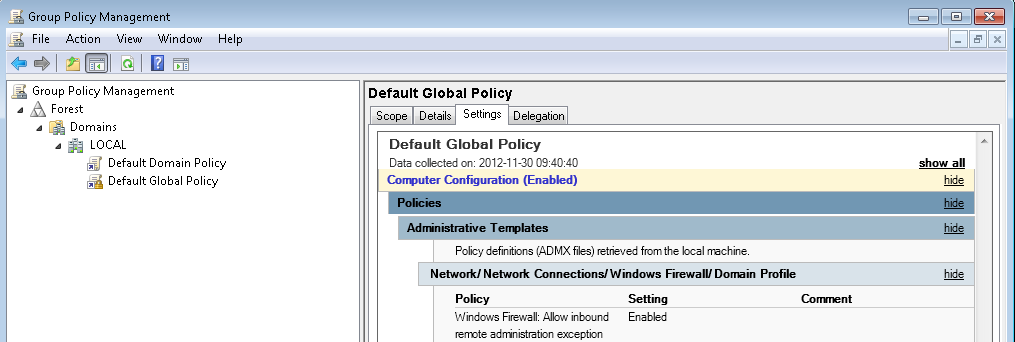
Modifying permissions via Group Policy
A customer of ours had problems with an installation.
We started troubleshooting and noticed that the installation did not run in Elevated Mode, but wanted to put files in a folder which by default it does not grant regular users the ability to add or modify files.
Manage Azure AD via PowerShell
You can install the Azure module directly from the PowerShell prompt and connect to the numerous services offered by Microsofts extensive cloud solution!

Change Calendar Permissions in Office 365
Per default the calendars of shared mailboxes in Office 364 have “FreeBusyTimeOnly” permissions applied.
You could create a new sharing policy and change the applied policy on those accounts.
I however chose to just change the sharing permissions on the shared calendar.

PowerShell: List newly created users
To help detect and prevent malicious behavior I usually implement different scripts or other monitoring features in my customers environments.
One of the snippets I frequently use is one that detects newly created accounts.
Change default OU for computers in AD
There are several reasons to change the default organizational unit of computers that join the domain.
The default OU (domain.local\Computers) cannot be linked with GPOs, and should be avoided since its builtin.
 Articles
- Passwordless GitHub Actions to Azure with Federation
- Real-time Entra ID Break-glass Sign-in Alerts (Part 2)
- Real-time Entra ID Group Alerts with Azure Functions (Part 1)
- End-to-End User Offboarding with Microsoft Graph PowerShell
- Automating Intune Win32 App Packaging with GitHub Actions
- Cleaning Up Stale Entra ID Devices with Microsoft Graph PowerShell